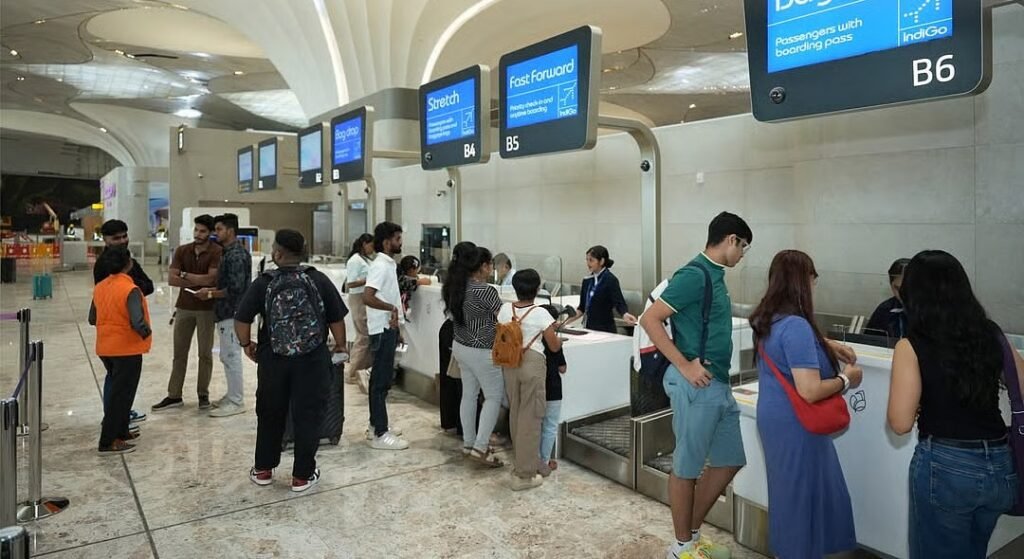
The commercial operations of Navi Mumbai International Airport (NMIA), which began in December 2025, represent far more than aviation infrastructure. Within weeks of launch, NMIA surpassed 100,000 passengers, confirming its role as Mumbai’s critical second aviation hub and the anchor for Mumbai 3.0 – a master-planned eastern economic corridor poised to redefine India’s commercial landscape.
Mumbai's Strategic Evolution: From 1.0 to 3.0
Mumbai’s urban growth has followed distinct phases:
Mumbai 1.0 established South Mumbai as India’s financial capital through the 20th century.
Mumbai 2.0 expanded the commercial core through BKC, Navi Mumbai, and Thane during the 2000s-2010s.
Mumbai 3.0, now materializing, shifts growth decisively eastward to a 120+ sq km planned corridor anchored by NMIA and stretching across strategic development zones.
The Mumbai 3.0 Corridor: Five Strategic Zones
PANVEL serves as the primary urban and commercial nucleus, positioned as the gateway between legacy Mumbai and the eastern growth belt.
PALASPE and JATADE emerge as logistics, warehousing, and industrial powerhouses, leveraging NMIA’s cargo capabilities and highway connectivity.
GIRAVALE and ASHTE transition rapidly from agricultural land to premium residential and mixed-use destinations, capturing airport-adjacent demand.
NAINA (Navi Mumbai Airport Influence Notified Area) represents Maharashtra’s most ambitious urban planning initiative – a 120 sq km region designed from inception for integrated residential, commercial, and institutional development.
NMIA: The Economic Multiplier
NMIA’s impact cascades across multiple sectors simultaneously:
Aviation Relief and Expansion: Absorbing overflow from the capacity-constrained Chhatrapati Shivaji Maharaj International Airport while establishing new international routes and airline networks.
Cargo and Logistics Revolution: NMIA’s dedicated cargo terminal attracts global supply chain players, logistics parks, and warehousing complexes to Palaspe-Jatade.
Corporate Relocation Catalyst: Data centers, corporate back offices, and technology campuses target the Panvel-NAINA belt for cost advantages and connectivity.
Hospitality Boom: Airport hotels, business hotels, and convention centers cluster around NMIA, creating new commercial nodes.
Infrastructure: The Connectivity Backbone
Mumbai 3.0 benefits from India’s most comprehensive multimodal infrastructure package:
Mumbai Trans Harbour Link (Atal Setu) cuts Mumbai-Panvel travel from 2 hours to 20 minutes across its 22 km sea-crossing.
Dedicated NMIA Access: Highway spurs, rail connections, and upcoming metro extensions provide seamless airport connectivity.
Metro Network Penetration: Lines 12 and 13 extend metro services into the NMIA corridor, linking Giravale-Ashte to the broader MMR network.
Expressway Integration: Samruddhi Mahamarg and other logistics corridors connect NAINA to national freight networks.
Real Estate: From Peripheral to Prime
Land across the Mumbai 3.0 corridor undergoes fundamental revaluation:
2024 Reality: Speculative peripheral agricultural and low-density land.
2026 Transition: Institutional-grade urban assets with clear zoning and master planning.
2030 Projection: Established prime commercial and residential markets with 3-5X appreciation from current levels.
Giravale and Ashte lead residential transformation, Panvel anchors commercial growth, while NAINA represents township-scale opportunity.
The 2026-2030 Investment Acceleration Window
Phase 1 (2026-2027): NMIA operational scaling reaches 10+ million annual passengers. International connectivity launches. Giravale-Ashte residential pricing accelerates.
Phase 2 (2028-2030): Corporate campuses and logistics parks mature. Panvel establishes commercial dominance. NAINA township development gains momentum.
This compressed 5-year window offers rare first-mover positioning before full ecosystem maturity.
Mumbai 3.0's Competitive Edge Over Legacy Mumbai
The eastern corridor eliminates legacy infrastructure constraints:
Superior Urban Planning: 120m right-of-way roads versus 12m legacy lanes. Pre-planned utility corridors. Sustainable design from Day 1.
Zoning Clarity: Institutional master plans replace ad-hoc development patterns.
Scalable Land: Large contiguous parcels enable township-scale projects rather than fragmented redevelopment.
Integrated Connectivity: Aviation, highways, metro, and rail converge at NMIA, creating unmatched accessibility.
Employment and Economic Impact
NMIA catalyzes lakhs of direct and indirect jobs across:
Aviation and Airport Services: 50,000+ direct jobs within 5 years.
Cargo and Logistics: 1 lakh+ jobs in Palaspe-Jatade warehousing and distribution.
Construction and Real Estate: Multi-year township development sustains employment.
Services and Retail: Corporate back offices, hospitality, and residential-driven retail create service economy.
The Bigger Strategic Picture
NMIA represents Mumbai’s growth operating system reboot – systematically shifting economic activity from capacity-constrained legacy zones to scalable, planned eastern markets.Integrated Connectivity: Aviation, highways, metro, and rail converge at NMIA, creating unmatched accessibility.
The Panvel-Palaspe-Giravale-Ashte-Jatade-NAINA corridor evolves from emerging suburbia to India’s next global business gateway, supported by aviation-led transformation, world-class connectivity, and institutional urban planning.
For developers and investors, the 2026-2030 window offers positioning at the epicenter of Mumbai’s next 30 years of sustained expansion – a once-in-a-generation urban transformation opportunity.